


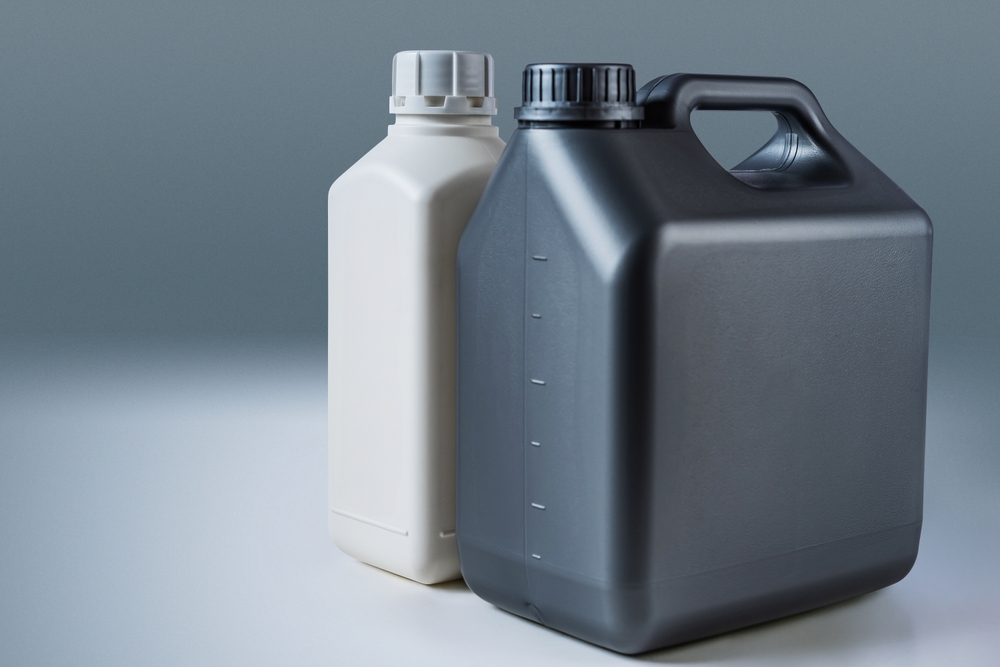
Picking a bottle usually starts with the size, shape and closure. The plastic it's made from deserves just as much thought. A cleaner that sits happily in one bottle can soften another, a juice can lose its freshness sooner, and a bottle filled too hot can lose its shape.
The short answer: HDPE is the tough, low-cost option for cleaning products, many chemicals and oils. PET is the clear one, best for drinks, sauces and cosmetics that need to look good on a shelf. LDPE is the soft, squeezy one used for dropper bottles and wash bottles.
At iBottles, we stock all three with no minimum order, so you can try a few bottles with your own product before committing to bulk. This guide compares the three plastics side by side and covers what to check before you order.
HDPE vs PET vs LDPE at a glance
|
HDPE |
PET |
LDPE |
|
|
Full name |
High-density polyethylene |
Polyethylene terephthalate |
Low-density polyethylene |
|
Resin code |
2 |
1 |
4 |
|
Typical density (g/cm³) |
0.94 to 0.97 |
1.33 to 1.45 |
0.91 to 0.94 |
|
Clarity |
Hazy and translucent when natural; colour can make it opaque |
Clear |
Translucent |
|
Rigidity |
Moderate |
High |
Low (squeezable) |
|
Moisture barrier |
Excellent |
Good |
Very good |
|
Oxygen barrier |
Poor |
Good |
Poor |
|
Starts to distort at |
About 71°C |
About 68°C |
About 43°C |
|
Impact and cold resistance |
Excellent |
Good |
Excellent |
|
Stress crack resistance |
Fair |
Excellent |
Good |
|
Alkalis |
Good |
Poor |
Good |
|
Acids |
Good |
Fair |
Good |
|
Solvents |
Poor |
Good |
Poor |
|
Oils |
Good |
Fair |
Good |
|
Kerbside recycling (England) |
Bottles collected by all councils |
Bottles collected by all councils |
Rigid bottles collected by all councils; film from March 2027 |
These are general ratings for typical bottle grades. The grade, wall thickness, closure and contents all make a difference, so test your product before a full production run.
What is HDPE, and when should you use it?
HDPE (high-density polyethylene) is the plastic behind milk bottles, laundry detergent bottles, jerry cans and chemical drums. It's tough and low cost, and it copes well with knocks and cold storage.
Its molecules have very little branching, which makes it stronger and harder than LDPE. It handles dilute acids, alkalis, alcohols and detergents well and is an excellent moisture barrier. That makes it a good fit for cleaning products, many household and industrial chemicals, oils, shampoo and lotions, and larger containers such as jerry cans, drums and carboys.
There are a few things to watch for. Natural HDPE is hazy rather than clear, so it won't show off your product, and it's a poor oxygen barrier. Many solvents and hydrocarbons can soften or swell it, or slowly pass through the wall, which is why we also stock fluorinated bottles and solvent resistant containers. Its stress crack resistance is only fair, too, so test it with your product first.
Browse our HDPE bottles, jerry cans and chemical packaging, or read our guide on how HDPE bottles are made.
What is PET, and when should you use it?
PET (polyethylene terephthalate) is the clear plastic used for almost all bottled water and fizzy drinks. If customers need to see what's inside, it's usually the one to choose.
It's rigid and far less likely than glass to break in transit, and stretch-blown PET bottles resist stress cracking very well. PET is also a much better oxygen barrier than HDPE or LDPE, although not a complete one. Oxygen and carbon dioxide still pass through slowly, which is why drinks that are very sensitive to oxygen, such as beer, often go into multilayer PET bottles. Unlike HDPE, it copes well with many solvents and alcohols.
It's a good fit for juices, smoothies and juice shots, sauces and dressings, cosmetics, hand wash and sanitiser, spirits sold in plastic, and testers and samples.
Heat is its weak spot. Standard PET bottles start to distort at around 60 to 70°C, well below PET's melting point of about 250°C. Hot filling usually runs at 85 to 90°C and needs heat-set PET bottles made for the job. PET is also too rigid to squeeze well, and it handles alkalis poorly, so HDPE is the safer choice for alkaline cleaners.
Several of our PET lines contain 30% recycled PET (rPET), including the round clear PET bottle and coloured rPET Swipe bottles. Browse our PET bottles, plastic drink bottles and clear PET sauce bottle, or read our introduction to what a PET bottle is.
What is LDPE, and when should you use it?
LDPE (low-density polyethylene) is made from the same building block as HDPE, but its molecules are more branched and don't pack together as tightly. The result is a softer, more flexible plastic that's easy to squeeze, which is why it's a common choice for squeeze bottles and dropper bottles.
It's translucent, performs well in the cold, is a very good moisture barrier and handles dilute acids, alkalis and alcohols well. Our range includes LDPE dropper bottles and pre-printed LDPE wash bottles for labs.
It's the least rigid of the three and starts to distort at a much lower temperature, so it doesn't take stacking weight as well as HDPE. Like HDPE, it's a poor oxygen barrier and struggles with many solvents. Oils and greases can affect it as well, so check compatibility if you're bottling concentrated oils.
See our dropper bottles, dispensing bottles and laboratory bottles for LDPE options.
Which material should you choose for your product?
Start with what's going in the bottle. This table covers some common products.
|
What you're bottling |
Best material |
Why |
|
Cleaning products and detergents |
HDPE |
Handles alkalis and detergents well, and works with trigger sprays |
|
Chemicals |
HDPE |
Good with most dilute acids and alkalis; check compatibility first |
|
Solvent-based products |
PET or fluorinated HDPE |
Standard HDPE and LDPE cope poorly with many solvents |
|
Oils |
HDPE |
Good oil resistance and excellent impact resistance |
|
Juices, smoothies and juice shots |
PET |
Clear, with a much better oxygen barrier than polyethylene |
|
Sauces and dressings |
PET for a clear pour, HDPE or LDPE for squeeze |
Depends on whether customers pour or squeeze |
|
Shampoo and lotions |
HDPE or PET |
HDPE for a squeezable opaque bottle, PET for a clear one |
|
Hand wash and sanitiser |
PET or HDPE |
PET for a clear counter-top bottle, HDPE for an opaque squeezable one |
|
Oils, tinctures and serums in droppers |
LDPE |
Soft enough to dispense through a dropper tip; check compatibility for concentrated oils |
|
Spirits |
PET |
Clear and much less breakable than glass |
|
Bulk liquids (not fuel) |
HDPE |
Used for jerry cans and drums |
Test with your product
Chemical resistance depends on the concentration, the temperature, how long the product sits in the bottle and the bottle itself. The safest check is to fill a few bottles with your actual product and see how they hold up before a full run.
Check the filling temperature
If you fill hot, standard PET won't cope. Use heat-set bottles made for hot filling, or let the product cool first.
Check food contact
All three plastics are widely used for food and drink, but only when the specific bottle and closure are made to food-contact standards. Check the product listing before you fill a bottle with anything that's going to be eaten or drunk.
Check the closure
Make sure the cap, pump, trigger or dropper fits the neck you're choosing, particularly if you need child-resistant or tamper-evident caps.
Recycling and recycled content
In England, every council has had to collect plastic bottles, pots, tubs and trays from all households since 31 March 2026, under Simpler Recycling. That covers rigid HDPE, PET and LDPE bottles alike. Councils don't have to collect bottles that held white spirits, paints, engine oils or antifreeze, or PVC packaging. Plastic film and bags join the list from 31 March 2027.
Scotland, Wales and Northern Ireland set their own rules, so customers there should check their council's guidance. Bear in mind that the number on the base tells you the type of plastic, not whether a particular bottle can be recycled.
Recycled content matters too. The UK Plastic Packaging Tax is charged at £228.82 per tonne on plastic packaging components with less than 30% recycled plastic. Businesses must register once they manufacture or import 10 tonnes or more of finished plastic packaging components in 12 months, or expect to in the next 30 days. Our guide to rPET vs PET bottles explains the tax and recycled content in more detail.
We stock recycled options in both main materials, including PCR HDPE Swipe bottles, PCR jerry cans and 30% rPET bottles. Recycled plastic can vary slightly in colour from batch to batch, so test first if an exact colour matters.
Browse iBottles' HDPE, PET and LDPE bottles
The easiest way to choose is to test first. With no minimum order quantity, you can order a few bottles, fill them with your product and check how they look and perform before you scale up.
We offer free UK mainland delivery on orders over £50 net, fast dispatch from our UK warehouse, and ISO 9001 and ISO 14001 accreditation behind every order.
Not sure which plastic is right? Call the iBottles team on 01298 815 000 or use our contact form for help choosing the right bottle, closure and material for your product.
FAQs about HDPE, PET and LDPE bottles
Is HDPE or PET better?
Neither is better overall. HDPE has better impact and cold resistance and copes better with alkaline products such as many cleaners. PET is clear, more rigid, handles many solvents better and is a much better oxygen barrier, so it suits drinks, sauces and cosmetics on display.
What’s the difference between HDPE and LDPE?
Both are polyethylene. HDPE has a tightly packed structure that makes it stronger and stiffer. LDPE has a branched structure that makes it soft and squeezable, which is why it’s used for dropper and squeeze bottles.
How can I tell what plastic a bottle is made from?
Check the recycling symbol on the base. A 1 means PET, a 2 means HDPE and a 4 means LDPE. PET bottles are also usually clear and glossy, while HDPE has a waxy, slightly cloudy finish. The number identifies the plastic, but it doesn’t guarantee the bottle can be recycled.
Are HDPE, PET and LDPE bottles food safe?
All three are widely used for food and drink when made to food-contact standards. None of them use BPA as a building block, but that alone doesn’t make a bottle food safe, so check that the specific bottle and closure are food grade for your product.
Can you put hot liquids in PET bottles?
Not in standard PET. Standard PET bottles start to distort at around 60 to 70°C, while hot filling usually runs at 85 to 90°C. Use heat-set PET bottles made for hot filling, or let the product cool first.
Which plastic bottle is the cheapest?
HDPE and LDPE are both low-cost materials, but the price of a bottle depends far more on its size, weight, shape, closure and order quantity than on the plastic. Compare the specific bottles you’re considering.
Which plastic is best for chemicals and solvents?
HDPE handles most dilute acids, alkalis and detergents well but copes poorly with many solvents. PET copes better with many solvents but handles alkalis poorly. For solvents and hydrocarbons, fluorinated HDPE adds an extra barrier. Either way, test your product in the bottle before a full run.
Which bottles are easiest to recycle in the UK?
In England, councils have had to collect plastic bottles from every household since 31 March 2026, whether they’re PET, HDPE or LDPE. Bottles that held engine oil, antifreeze, white spirit or paint are the exception. Elsewhere in the UK, check local council guidance.