


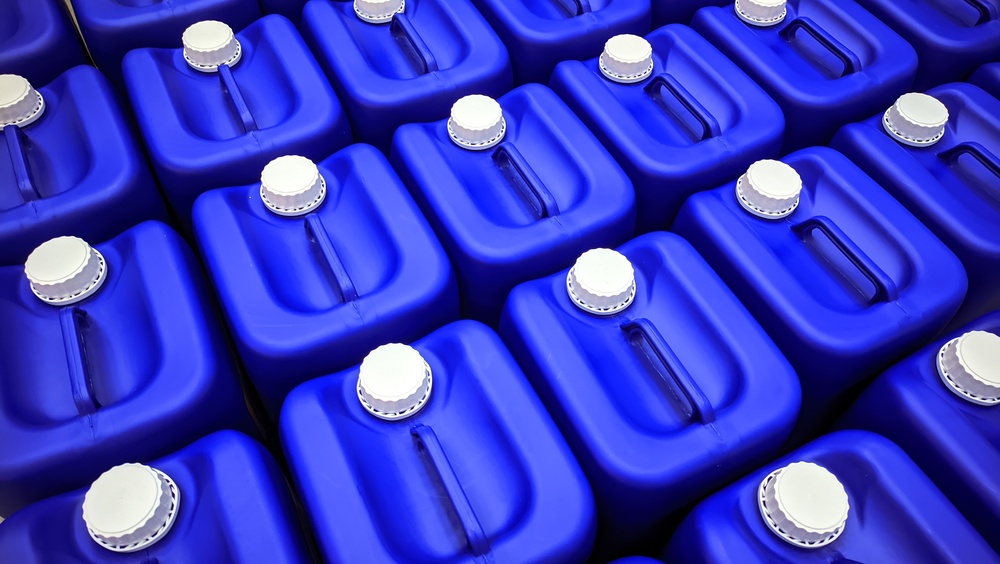
Whether you’re bottling a new product, keeping water on hand for site work or decanting chemicals in a workshop, picking a jerry can size comes down to two questions: how much liquid you need to move, and how much weight the person handling it can manage once it’s full.
The short answer: choose 5 litres for small batches, retail packs and anything carried by hand most days. Choose 10 litres when you want fewer refills but still need a can that most people can lift and pour. Go for 20 or 25 litres for bulk storage, or wherever the can will stay put and be emptied with a tap or pump. Water weighs about 1kg per litre, so a full 25 litre can weighs around 25kg before you add the can itself.
At iBottles, we stock plastic jerry cans from 1 litre up to 30 litres, including UN-approved, non-UN, fluorinated and recycled options. This guide covers what each size suits, and what to check before you order.
Jerry can sizes at a glance
|
Size |
Weight full of water |
Good for |
Where to look in our range |
|
1 to 4.5 litres |
1 to 4.5kg |
Samples, retail packs, oils, small batches |
Economy tamper-evident, PCR recycled, rectangular oil, 4 litre side handle |
|
5 litres |
About 5kg |
Retail and trade packs, frequent hand carrying, testing a new product |
UN-approved stackable, heavyweight UN-approved, economy, PCR, heavy duty water |
|
6 to 12.5 litres |
6 to 12.5kg |
Workshop and site use, water for trips, fewer refills |
Non-UN stackable (6 and 8 litres), UN-approved stackable (10 and 12.5 litres), heavyweight UN-approved (10 litres), 9.5 litre slimline water can |
|
15 to 20 litres |
15 to 20kg |
Bulk storage, chemicals, dispensing through a tap or pump |
UN-approved stackable, fluorinated (20 litres) |
|
25 to 30 litres |
25 to 30kg |
Bulk storage with minimal lifting, base water supply |
UN-approved stackable (25 and 30 litres), heavyweight UN-approved, fluorinated, heavy duty water (25 litres) |
Weights are for water and don’t include the can. Denser liquids weigh more for the same volume, and most oils a little less.
Jerry cans under 5 litres
Smaller cans make sense when you’re selling by the unit, sending out samples or packing liquids that are used a little at a time. Compared with a standard bottle, a jerry can gives you a built-in handle and a stable base, which makes it easier to pour from.
Our economy tamper-evident jerry cans come in 1, 2, 2.5, 4, 4.5 (gallon) and 5 litre sizes with a 38mm neck. For oils, the rectangular oil jerry can comes in 1, 4 and 5 litres, with a Visi-Line strip down the side so you can keep track of the level.
5 litre jerry cans
If you’re unsure where to start, 5 litres is a safe bet. Full of water it weighs about 5kg, which is manageable to lift, carry and pour, so it suits retail and trade packs that your own customers will handle. It’s also a sensible size for testing a new product before you commit to larger containers.
5 litres also has the widest choice in our range. You’ll find it in these ranges:
-
economy and PCR ranges
10 litre jerry cans
10 litres is the middle ground. Full of water it weighs about 10kg, which sits within the HSE’s guideline lifting figures for both men and women when the can is held close to the body. You get twice the volume of a 5 litre can, so you’ll refill less often, without reaching the weights where lifting starts to need real thought.
Our UN-approved stackable range includes 10 and 12.5 litre sizes, and the heavyweight UN-approved jerry can comes in 10 litres in natural, white and blue. If you need a little less, the non-UN stackable jerry can comes in 6 and 8 litres. For water, the 9.5 litre heavy duty can is slimline and available with a cap or a tap.
20 litre jerry cans
At 20 litres you’re into bulk volumes. A full can of water weighs about 20kg plus the container. That’s above the HSE guideline figure for women and getting close to the figure for men, so this size works best where the can won’t be lifted often: storage, refilling smaller containers, or dispensing through a tap.
Our UN-approved stackable jerry cans come in 15 and 20 litres. For more hazardous chemicals, the fluorinated jerry can is a barrier container available in 20 and 25 litres. For smaller volumes of aggressive liquids, see our solvent resistant plastic bottles.
25 and 30 litre jerry cans
25 litres is a lot of liquid to move by hand. Full of water it weighs around 25kg before you count the can, which puts it at or above the top HSE guideline figure. These sizes work best when they’re filled where they’ll be used, moved on a trolley or pallet, and emptied with a tap or pump rather than lifted to pour.
We stock 25 litre jerry cans in our UN-approved stackable and heavyweight ranges, in the fluorinated range, and in our heavy duty water range. There’s also a red 25 litre UN-approved jerry can, which is handy if you colour code your liquids. Our largest is the 30 litre UN-approved stackable can. If you need more than that, our plastic drums and barrels cover bulk volumes.
What to check before you choose a size
How heavy it will be when full
The HSE publishes guideline weights for lifting and lowering. In ideal conditions, with the load held close to the body between knuckle and shoulder height, the figures are 25kg for men and 16kg for women. They’re lower when the load is held away from the body or lifted to shoulder height. They aren’t legal limits, but they’re a useful filter: if a full can comes in over them, it’s worth looking at a smaller size or a lifting aid.
Water is the easy sum at about 1kg per litre. Denser liquids weigh more for the same size of can, so base your choice on the weight of your actual product.
How far it needs to travel
The same guideline figures apply to carrying, as long as the load is held against the body and carried no further than about 10 metres without a rest. If a can has to go further than that, a smaller size or a trolley will make the job easier.
What’s going in it
If you’re transporting hazardous liquids, you’ll need a UN-approved jerry can suited to your product. For drinking water or food products, check for the Food Safe mark on the product page. For more aggressive chemicals, a fluorinated can is worth considering. None of this changes the size you need, but the range you choose decides which sizes are available.
How you’ll get the liquid out
The bigger the can, the harder it is to tip and pour. Many of our jerry cans can be fitted with a dispensing tap or a heavy duty dispensing pump, so the can stays where it is and you fill from it. Check the neck size on the product page so your tap or pump fits.
Where it will be stored
Our stackable jerry cans are rectangular, so they sit neatly side by side and stack to make better use of shelf and floor space. The heavyweight UN-approved cans come with a choice of cap colours, so you can code different liquids at a glance.
Browse iBottles’ plastic jerry cans
The easiest way to settle on a size is to try it. With no minimum order quantity, you can order a couple of cans in different sizes, fill them with your product and see how they handle before you buy in volume.
We offer free UK mainland delivery on orders over £50 net, fast dispatch from our UK warehouse, and ISO 9001 and ISO 14001 accreditation behind every order. Our label application service can also apply your barcodes, batch IDs or branded labels to your smaller jerry cans for you.
Not sure which size is right? Call the iBottles team on 01298 815 000 or use our contact form, and we’ll help you find the right can and closure for your product.
FAQs about jerry can sizes
What size jerry can do I need?
For frequent hand carrying, small batches or retail packs, 5 litres is usually right. 10 litres cuts down on refills while staying manageable to lift. 20 to 25 litres suits bulk storage where the can is emptied with a tap or pump rather than lifted.
How much does a full 20 litre jerry can weigh?
Filled with water, about 20kg plus the weight of the can. Denser liquids weigh more for the same volume.
How much does a full 25 litre jerry can weigh?
Filled with water, around 25kg before you add the can, which is at or above the HSE’s top guideline lifting figure. A trolley, tap or pump saves you lifting it when it’s full.
Is it better to buy one 25 litre jerry can or two 10 litre cans?
If the liquid needs carrying by hand, two smaller cans are easier and safer to lift. If it will stay in one place and be dispensed through a tap, a single larger can means fewer containers to manage.
What size jerry can is best for camping or caravanning?
A 5 or 9.5 litre can is easy to carry to and from a tap, while a 25 litre can works as a base supply. Our heavy duty water jerry cans are made from food-grade plastic in 5, 9.5 and 25 litres, and there’s a 23 litre waste water can that can be stored on its side.
Do I need a UN-approved jerry can?
Only if you’re transporting hazardous goods that require UN-approved packaging. For water, food products and non-hazardous liquids, a non-UN jerry can is usually fine. If you’re not sure, call us and we’ll talk you through the options.
How full should I fill a jerry can?
Leave a little space at the top rather than filling to the brim, because liquids expand as they warm up. If you’re shipping hazardous goods, check the filling limits that apply to your packaging.